
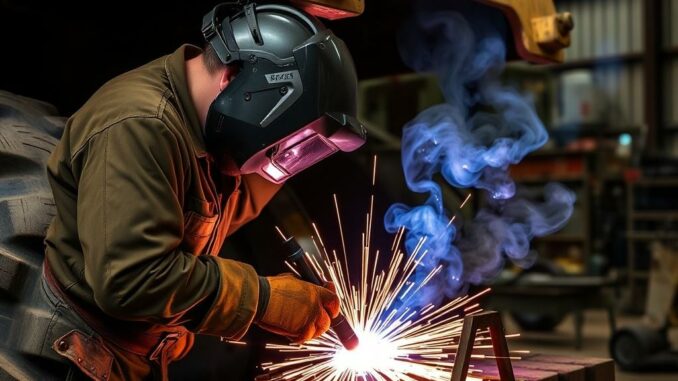
SQLITE NOT INSTALLED
When we think about the vast expanses of mining sites or the sprawling fields of agriculture, we don’t often consider the intricate, unseen craftsmanship that keeps these industries running smoothly. At the heart of their operation lies heavy equipment—massive machines that bear the brunt of the hardest work. These mechanical giants are subjected to relentless wear and tear, harsh environmental conditions, and intense operational stress. This is where the specialized skill of heavy equipment welding for mining and agriculture steps in. It’s a vital process that ensures machines stay strong, reliable, and efficient.
In this article, we’ll dive deep into the world of heavy equipment welding, exploring every facet of this critical trade. Whether you’re new to the industry or a seasoned professional, you’ll learn about the various welding techniques, challenges, safety measures, and materials used in heavy equipment maintenance and repair. We’ll also touch upon the differences between mining and agricultural welding, the role of technology, and how future innovations might reshape the landscape of heavy equipment welding.
Understanding Heavy Equipment Welding: What Makes It Unique?
Heavy equipment welding is quite distinct from typical welding jobs you might find in manufacturing or small-scale repairs. It’s a specialized branch that involves working on large, often bulky, machinery parts that undergo tremendous stress and demanding conditions. Mining machines like excavators, haul trucks, bulldozers, and drills, as well as agricultural equipment such as tractors, plows, and harvesters, require bespoke welding solutions that can withstand tough environments.
The primary goal of heavy equipment welding in these sectors is to restore or enhance structural integrity. The exposed components are frequently exposed to impact forces, abrasive materials like rocks and soil, corrosive elements, and fluctuating temperatures. Welding here isn’t merely about joining two pieces of metal—it’s about ensuring longevity, safety, and optimal performance.
Key Challenges of Heavy Equipment Welding in Mining and Agriculture
The environments of mining and agriculture are vastly different in terrain and operational procedures, yet the welding challenges share several commonalities. Let’s explore these challenges:
- Material Thickness and Size: Parts can be extremely thick, often requiring high heat input to ensure deep weld penetration without compromising metal integrity.
- Accessibility: Many components are located in hard-to-reach areas of large machinery, making welding difficult without disassembling equipment.
- Material Types: Mining and agricultural heavy equipment use various steels, including carbon steel, alloy steel, and sometimes stainless steel, each demanding careful consideration for welding procedures.
- Environmental Conditions: Dusty, wet, or cold environments can adversely affect weld quality, requiring additional controls and preparation.
- Time Constraints: Downtime is costly, so weld repairs must be promptly and efficiently executed without sacrificing quality.
Addressing these challenges demands a combination of skilled labor, proper equipment, and a solid understanding of materials science.
The Essential Welding Techniques for Heavy Equipment
Heavy equipment welding for mining and agriculture often relies on a few core welding techniques, each tailored to specific tasks or materials. Let’s take a look at the most widely used methods.
Shielded Metal Arc Welding (SMAW) – The Workhorse of Field Repairs
SMAW, commonly known as stick welding, is one of the most versatile and widely used welding processes for heavy equipment repair. Due to its simplicity and portability, it is favored in mining and agriculture environments where access to sophisticated power sources might be limited.
SMAW involves using a consumable electrode coated in flux to create an arc between the electrode and the metal workpiece. As the electrode melts, it deposits weld metal and protective slag, shielding the weld from contaminants. This method works well with thicker materials and can be employed in less-than-ideal weather conditions, making it perfect for outdoor heavy equipment welds.
Gas Metal Arc Welding (GMAW) – Speed and Precision
GMAW, also known as MIG welding, provides faster welding speeds and cleaner welds compared to SMAW. It uses a continuous wire electrode fed through a welding gun and relies on a shielding gas to protect the weld pool from atmospheric gases.
This technique is widely used in agricultural equipment welding due to its ability to produce high-quality welds quickly, thus minimizing downtime in fast-paced planting or harvesting seasons. However, GMAW requires a controlled environment or shielding to prevent weld defects caused by wind or rain.
Flux-Cored Arc Welding (FCAW) – The Best of Both Worlds
FCAW uses a tubular wire filled with flux that shields the weld core, combining some of the advantages of SMAW and GMAW. This method is particularly popular for heavy equipment welding because it offers deep penetration, high deposition rates, and the ability to weld outdoors without the need for external shielding gas.
In mining applications where equipment operates around open excavation sites with high winds and dust, FCAW is often the preferred process.
Other Advanced Techniques
While SMAW, GMAW, and FCAW are dominant, other methods such as Submerged Arc Welding (SAW), Tungsten Inert Gas (TIG) welding, and laser welding are occasionally used for specific tasks or precision welds, especially in manufacturing or refurbishment of heavy equipment components.
Materials and Metals in Heavy Equipment Welding
Understanding the metals involved in heavy equipment welding is critical. The materials must withstand severe mechanical forces, abrasion, corrosion, and environmental extremes. Below is an overview of the common metals and alloys you’ll encounter.
| Metal Type | Characteristics | Common Uses in Heavy Equipment | Welding Considerations |
|---|---|---|---|
| Carbon Steel | Strong, plentiful, relatively inexpensive | Structural frames, chassis, buckets | Preheating may be required for thick sections to avoid cracking |
| Alloy Steel | Enhanced mechanical properties, wear-resistant | Wear plates, blades, cutting edges | Requires controlled heat input and proper filler materials |
| Stainless Steel | Corrosion-resistant and durable | Special components exposed to corrosive environments | Sensitive to heat input; requires inert shielding gases |
| Cast Iron | Brittle but good compressive strength | Engine blocks, housings | Special preheat and post-heat treatment to avoid cracking |
Choosing the right filler material and welding parameters is vital because incompatible welding can cause weak joints, cracks, or distortion, leading to equipment failure.
Typical Welding Repairs and Fabrications in Mining and Agriculture Equipment
Every day, welders in the mining and agricultural sectors face a range of repair and fabrication challenges. Equipment undergoes extensive abuse from loads, impacts, abrasion, and vibrations. Knowing common repairs helps understand the role heavy equipment welding plays in maintaining productivity.
Repairing Cracked or Broken Components
Mining haul trucks, excavator booms, and agricultural plow arms often develop cracks due to fatigue or overstress. Welding repairs involve removing damaged metal, cleaning cracked areas, preheating to reduce thermal shock, and carefully applying weld beads to restore structural strength.
Wear Plate Replacement and Hardfacing
Mining buckets, cutting edges, and soil-engaging parts experience abrasion from rocks and soil. These parts are often repaired with wear plate replacements or hardfacing—a welding process that applies a layer of significantly harder material to resist wear.
Fabrication of Custom Attachments
Sometimes, farming or mining operations require customized equipment modifications or new attachments. Welding allows fabricators to build these components on-site or in specialized workshops, tailoring equipment to meet specific operational needs.
Hydraulic Cylinder Repairs
Hydraulic cylinders on large machinery are critical for movement. Welding is often used to repair cylinder rods or housings damaged by impact or corrosion, ensuring smooth function and safety.
Safety Measures and Best Practices for Heavy Equipment Welding
Welding on heavy equipment presents unique safety challenges due to the size of materials, outdoor conditions, and confined spaces. Adhering to safety protocols prevents accidents, injuries, and equipment damage.
Personal Protective Equipment (PPE)
Welders must use flame-resistant clothing, welding helmets with proper shading, gloves, safety glasses, and steel-toed boots. In mining and agriculture, additional gear such as respiratory protection, hearing protection, and high-visibility vests may be necessary.
Safe Work Environment Setup
Clearing debris, ensuring proper ventilation to avoid fumes, and securing heavy components properly before welding are critical steps. Avoiding wet or unstable working surfaces helps reduce slips and electrical hazards.
Electrical Safety
Due to the high amperage used in welding, proper grounding of equipment and checking cables for damage is essential, especially in wet or dusty conditions common in mining and agriculture.
Training and Certification
Qualified welders who understand the specific materials and techniques used in heavy equipment repair ensure the job is performed correctly and safely. Certification programs focused on mining or agricultural welding can improve outcomes and safety records.
Technological Advances Revolutionizing Heavy Equipment Welding
Like many industries, heavy equipment welding is benefiting from innovative technologies that improve quality, efficiency, and safety.
Automated and Robotic Welding
While field repairs will always require manual skill, automated welding systems are increasingly used in manufacturing or refurbishment facilities. These machines maintain consistent weld quality on large heavy equipment parts and reduce human fatigue.
Advanced Welding Materials and Consumables
Development of new filler metals and flux compositions improves weld durability, corrosion resistance, and reduces defects in challenging environments.
Non-Destructive Testing (NDT) Techniques
Technologies such as ultrasonic testing, magnetic particle inspection, and radiography are used to detect weld flaws before failure occurs, helping preventive maintenance in mining and agriculture.
The Future of Heavy Equipment Welding in Mining and Agriculture
As mining and agriculture continue to evolve with increased automation and sustainability focus, heavy equipment welding will also adapt. Lightweight yet durable materials, more eco-friendly welding processes, and integration with digital monitoring systems are paving the way for future developments.
Moreover, environmental regulations and safety standards will likely encourage innovation in welding methods that reduce emissions and improve worker protection. As the demand for mining raw materials and agricultural productivity grows, the importance of skilled heavy equipment welding will only deepen.
Conclusion: Why Heavy Equipment Welding Matters
Heavy equipment welding for mining and agriculture is much more than just a technical trade. It is a cornerstone of industry, enabling machines to perform beyond their expected limits and extending their operational life. The welders behind these repairs are unsung heroes ensuring safety, efficiency, and productivity.
By understanding the unique challenges, techniques, materials, and innovations related to heavy equipment welding, businesses can better maintain their investment in machinery and minimize costly downtime. Whether it’s a quick roadside fix or a complex workshop project, welding keeps the wheels of mining and agriculture turning—literally and figuratively.
If you’re interested in pursuing a career or business opportunity in this field, focus on building your technical skills, understanding safety protocols, and staying up to date with the latest welding technologies. The demand for expert heavy equipment welding in mining and agriculture isn’t just a career—it’s a pathway to contributing to two of the world’s most vital industries.