
SQLITE NOT INSTALLED
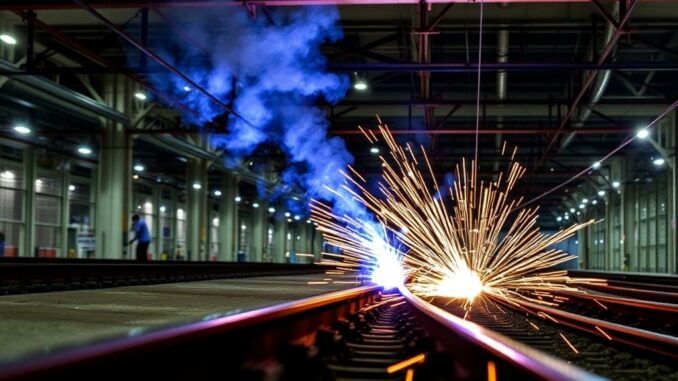
Railway systems are the lifelines of commerce and daily life in many countries, connecting cities, industries, and communities with steel threads that stretch thousands of miles. The backbone of this intricate network hinges on one crucial element: the railway tracks themselves. However, these steel paths are only as strong as the welding that bonds them together. Railway welding is a highly specialized field that plays a vital role in ensuring the safety, durability, and efficiency of rail transport. In this comprehensive article, we will dive deep into the world of railway welding, exploring its techniques, challenges, and innovations that keep trains running smoothly across the globe.
What is Railway Welding and Why is it Important?
At its core, railway welding refers to the process of joining steel rails to create continuous tracks that can withstand the immense pressure exerted by passing trains. Unlike ordinary welding, railway welding demands exceptional precision and strength because any flaw or weakness in the joint can lead to catastrophic train derailments or breakdowns. The safety of passengers, freight, and the rail infrastructure itself depends heavily on proper railway welding practices.
The importance of perfect welds becomes evident when we consider the sheer volume of stress that rails endure daily. Trains often carry thousands of tons, exerting dynamic loads that vary with speed, weight, and temperature changes. When rails are properly welded, they provide a seamless surface allowing trains to travel faster and more smoothly, reducing maintenance needs and operational hazards. On the other hand, poorly welded joints can result in track misalignments, cracks, and eventually dangerous failures.
The Evolution of Railway Welding: A Brief History
Railway welding has come a long way since the early days of the Industrial Revolution when rails were joined mainly by mechanical fishplates and bolts. These joints, while convenient, presented numerous problems such as loosening over time and creating noisy, uneven tracks.
In the 20th century, advances in metallurgy and welding technology introduced modern welding methods such as flash butt welding and thermite welding. These innovations significantly increased the quality and reliability of rail joints, allowing the introduction of continuous welded rails that help reduce maintenance costs and improve track performance.
Key Techniques in Railway Welding
There are several welding methods used in railway construction and maintenance. Each technique has its own advantages and is chosen based on factors such as rail material, environmental conditions, and specific operational requirements. The most common railway welding techniques include:
- Thermite Welding (Chemical Welding)
- Flash Butt Welding
- Electric Arc Welding
- Gas Welding
Thermite Welding: The Heat of Chemical Reactions
One of the most widely used welding methods for joining rail ends is thermite welding. This technique harnesses the intense heat generated by a chemical reaction between aluminum powder and iron oxide, producing molten steel capable of fusing the rail ends together.
Thermite welding is especially valuable for field repairs because it doesn’t require an external power source, and the molten steel can fill any gaps, creating a strong, durable bond. The setup involves preparing the rail ends, positioning a mold around the joint, and igniting the thermite charge. Once the molten steel flows and cools, the mold is removed, and the weld is ground smooth to create a seamless track surface.
Flash Butt Welding: Precision and Automation
Flash butt welding is an electrical resistance welding method that uses high voltage and pressure to join the rail ends. The process begins by placing two rail ends against each other and passing an electric current through the contact point. This causes the metal to heat up and “flash” as it melts at the edges. Simultaneously, hydraulic presses push the rails together, forging a solid weld.
This method is highly automated, offering consistent and high-quality welds with minimal operator intervention. Flash butt welding is ideal for factory conditions, where rails can be pre-welded before installation, resulting in continuous welded rail (CWR) sections that require very little maintenance.
Electric Arc Welding: Versatile and Efficient
Electric arc welding is often used for track maintenance and repair, especially for smaller rail sections and specific structural components. This technique involves creating an electric arc between an electrode and the rail metal, melting both surfaces and joining them as the molten metal cools.
Although electric arc welding requires skilled welders and strict control of the process parameters, it provides flexibility and is widely used to fix cracks or join rail accessories in situ.
Gas Welding: An Older Yet Useful Method
Gas welding employs oxy-fuel flames to heat and melt rail parts for joining. While not as common today due to slower speeds and less consistency, gas welding remains useful for emergency repairs and work on lighter rail components. Its simplicity and portability make it a valuable technique in remote areas where other welding systems are unavailable.
Ensuring Safety through Proper Railway Welding Practices
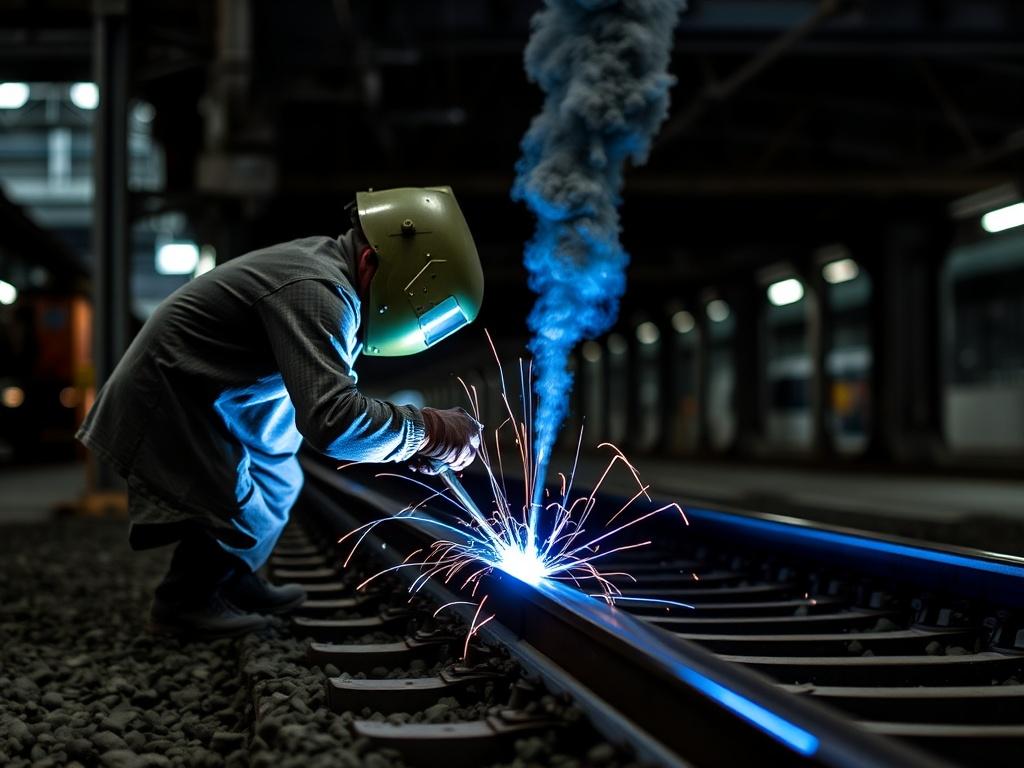
Railway welding isn’t just about joining metal; it is pivotal to ensuring the safety of the entire rail infrastructure. The future of transportation depends on careful implementation of welding processes, ongoing inspection, and proper maintenance. Any oversight can have disastrous consequences.
To guarantee safety, railway welders follow strict guidelines and standards laid out by international rail organizations and national safety authorities. These include thorough preparation of rail ends, controlled welding parameters, and post-weld heat treatment to relieve internal stresses in the metal.
Moreover, non-destructive testing (NDT) techniques play a crucial role in evaluating weld integrity without damaging the new joints. Methods like ultrasonic testing, magnetic particle inspection, and radiographic testing are routinely employed to detect cracks, voids, and other flaws inside the welds.
Effective training programs, certification of welders, and continuous monitoring of rail conditions ensure that railway welding contributes to a safe and reliable railway system that passengers and cargo can depend on.
Common Challenges in Railway Welding
Despite its importance, railway welding is not without challenges. Rail steel is typically high-carbon steel, which requires careful heat control to prevent cracking and maintain strength. External factors like weather conditions and track accessibility can also complicate welding procedures.
Here are some common challenges faced during railway welding:
| Challenge | Description | Impact on Welding |
|---|---|---|
| Temperature Extremes | Cold weather can make steel brittle, while excessive heat may cause expansion issues. | Requires pre-heating or cooling strategies to avoid weld defects. |
| Rail Alignment | Misaligned rail ends lead to poor weld quality and track irregularities. | Demands precise fitting and adjusting before welding. |
| Time Constraints | Railway maintenance windows are often short to avoid disrupting traffic. | Requires efficient and fast welding techniques. |
| Accessibility | Remote and difficult terrain can obstruct the transportation of welding equipment. | Necessitates portable and versatile welding solutions. |
Durability: Building Tracks That Stand the Test of Time
The ultimate goal of railway welding is to produce joints that not only ensure safety but also last as long as possible under heavy usage. Durability in single rail joints impacts the overall lifetime of the railway tracks, lowering maintenance frequency and costs. Achieving this requires a blend of advanced welding technology and diligent post-welding inspection and treatment.
Apart from the welding quality, long-lasting tracks depend on understanding the physical and chemical composition of the rails. Modern steel rails are engineered with specific alloying elements and heat treatments designed to resist wear and fatigue. Proper welding complements these material properties by ensuring that the joints mirror the strength and resilience of the parent rail elements.
Factors Affecting the Durability of Welded Rails
Several factors influence the longevity of railway welds:
- Weld Quality: Imperfections such as porosity, cracks, or lack of fusion reduce durability and can propagate under cyclic rail loading.
- Heat Treatment: Post-weld heat treatment relieves residual stresses and reduces the risk of brittle fracture.
- Maintenance: Regular inspection, grinding, and repairs help prolong weld life.
- Environmental Conditions: Moisture, temperature changes, and corrosive substances can degrade the weld metal and surrounding rail.
The Role of Technological Innovations in Enhancing Rail Weld Durability
The field of railway welding continues to evolve with new technologies aimed at maximizing safety and durability. For example, modern sensors and drones help monitor track conditions in real-time, allowing early detection of weld defects before they develop into major failures.
Advancements in welding metallurgy, such as improved filler metals and automated welding machines with AI control systems, also contribute to producing stronger and more consistent welds. Incorporating computer simulations to optimize welding parameters results in less trial-and-error on the field and better outcomes.
Environmental and Economic Impact of Railway Welding
Railway welding doesn’t just affect the rails and trains, but it also has wider environmental and economic implications. Properly welded tracks contribute to the efficiency and sustainability of rail transport, which is already one of the most eco-friendly modes of moving goods and people.
By extending the life of rails and reducing the need for frequent track replacements, good railway welding helps minimize resource consumption and waste. It also reduces downtime for maintenance, leading to smoother logistics and lower operational costs which benefit businesses and consumers alike.
Comparing Welding Methods: Cost and Environmental Efficiency
| Welding Method | Cost | Environmental Impact | Suitability |
|---|---|---|---|
| Thermite Welding | Moderate | Uses chemical reaction; produces slag byproduct. | Field repairs; remote locations |
| Flash Butt Welding | Higher initial cost | Electric power consumption; minimal waste | Factory pre-welding; large continuous rails |
| Electric Arc Welding | Low to moderate | Electricity consumption; fume emission | Maintenance and small repairs |
| Gas Welding | Low | Fuel consumption; slower process | Emergency repairs; light work |
Training and Certification: The Human Element Behind Railway Welding
Even the best welding technology can fail without skilled craftsmanship. Railway welding demands highly trained personnel with extensive knowledge of welding principles, rail materials, and safety standards. Certified welders undergo rigorous training and testing to ensure they can produce joints that meet strict quality requirements.
Many countries and rail organizations have established formal certification schemes that include both theoretical instruction and practical examinations. Continuous professional development is also encouraged as new welding technologies and standards emerge.
Core Skills and Knowledge Areas for Railway Welders
- Metallurgy basics relevant to rail steel
- Hands-on proficiency in different welding methods
- Rail preparation and alignment techniques
- Health and safety awareness in welding environments
- Inspection and quality control procedures
Future Trends in Railway Welding
The future of railway welding looks promising with ongoing developments that promise even safer, faster, and more durable rail joints. Among these trends are the integration of robotics and AI to automate welding processes further, advanced sensor technology for real-time weld monitoring, and new environmentally friendly welding materials and techniques.
Additionally, the growing emphasis on high-speed rail networks challenges the welding industry to create joints that can withstand higher speeds and loads without failure. Research in nanomaterials and innovative alloys may soon revolutionize how rails and welds are designed and manufactured.
Summary
Railway welding is an indispensable element of modern rail transportation that directly affects safety and durability. By understanding the diverse welding techniques, challenges, and innovations involved, stakeholders can ensure that tracks remain reliable and efficient. With increasing technological advancements and a strong focus on training and standards, the future of railway welding will continue to support the growth and safety of rail networks worldwide.
Whether it’s thermite welding out in the field or flash butt welding in factories, each method serves a unique and critical purpose. As consumers, commuters, or rail professionals, appreciating the complexity and importance of railway welding helps us recognize the incredible engineering behind every journey we take on the rails.