
SQLITE NOT INSTALLED
Pipeline welding is a critical process in the oil and gas industry, serving as the backbone for transporting these essential resources across vast distances. Whether under mountains, beneath the ocean floor, or sprawling across deserts, pipelines must be constructed with the utmost precision and care. In this article, we will delve deep into the world of pipeline welding, exploring various techniques, tools, challenges, and safety measures used in the oil and gas industry. We’ll also uncover how modern technology is reshaping this vital craft, making pipeline systems more reliable and secure than ever before.
Understanding Pipeline Welding and Its Importance
Before diving into welding techniques, it is crucial to understand what pipeline welding entails and why it is integral to the oil and gas sector. Simply put, pipeline welding is the process of joining metal pipes through various welding methods to create continuous and durable conduits. These conduits transport oil, natural gas, and other hydrocarbons from extraction sites to processing plants, storage facilities, and distribution centers.
With pipelines spanning thousands of miles, the integrity of each weld affects the safety, efficiency, and sustainability of the entire infrastructure. A weak or faulty weld can lead to leaks, environmental disasters, and enormous financial losses. Therefore, mastering pipeline welding techniques is paramount to ensuring the success and safety of oil and gas operations worldwide.
The Role of Pipelines in the Oil and Gas Industry
Pipelines hold a unique place in the oil and gas industry because they provide a cost-effective, efficient, and relatively safe means of transportation compared to alternatives such as trucks or rail. The network of pipelines stretches across continents and under bodies of water, connecting producers to consumers in a seamless manner.
The durability and leak resistance of pipelines heavily depend on the quality of the welding jobs. This connection between weld quality and operational success makes pipeline welding an art and science that demands skilled professionals and advanced technology.
Common Pipeline Welding Techniques
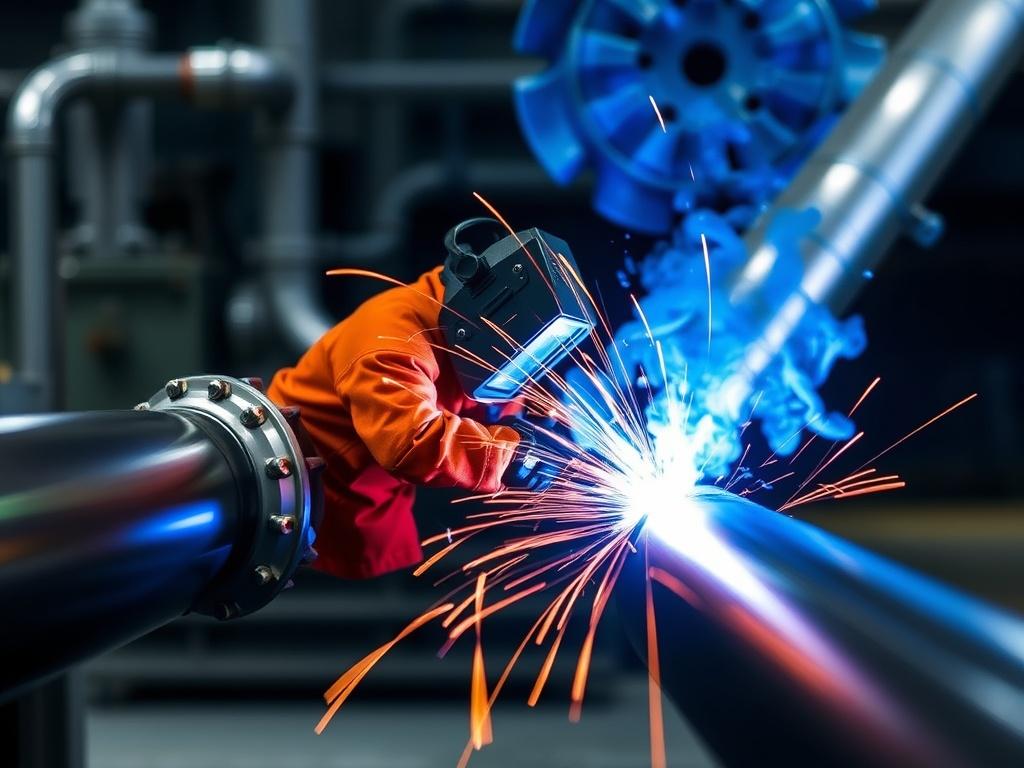
Multiple welding techniques are used in the oil and gas industry, each with advantages tailored to specific materials, conditions, and pipe configurations. Here, we explore some of the primary methods and discuss when and why they are used.
Shielded Metal Arc Welding (SMAW)
Shielded Metal Arc Welding, often called stick welding, is one of the oldest and most commonly used welding techniques in pipeline construction. Its popularity stems from its simplicity and versatility in fieldwork, especially in remote locations.
SMAW uses a consumable electrode coated in flux to produce an electric arc that melts both the electrode and the base material, creating a strong weld pool. The flux generates a protective gas shield that prevents contamination from atmospheric oxygen and nitrogen.
This method is advantageous for pipeline welding in the oil and gas industry because it:
- Works well on thick steel pipes
- Performs effectively outdoors and in windy conditions where other welding techniques might falter
- Requires relatively low equipment investment
- Allows repair work and maintenance on existing pipelines
However, SMAW welding requires experienced welders to produce consistent high-quality welds, and the process can be slower compared to some automated methods.
Gas Tungsten Arc Welding (GTAW)
Also known as Tungsten Inert Gas (TIG) welding, GTAW is celebrated for its precision and ability to produce high-quality welds with minimal defects. Using a non-consumable tungsten electrode and an inert gas shield (usually argon), GTAW allows great control over the weld pool and heat input.
This method excels in pipeline welding applications requiring clean, high-integrity welds such as those involving thin-walled stainless steel pipes or corrosion-resistant alloys. Since GTAW can be slower and demands a high skill level, it is often employed in critical sections or high-specification pipelines.
Gas Metal Arc Welding (GMAW)
Often referred to as Metal Inert Gas (MIG) welding, GMAW uses a continuous wire feed as an electrode within a protective inert gas atmosphere. This process combines speed and automation, making it ideal for repetitive welds on pipelines.
GMAW is widely used for welding large diameter pipes thanks to:
- High deposition rate
- Reduced labor costs due to automation
- Consistent quality results when operated by experienced technicians
However, GMAW is more sensitive to environmental conditions like wind, which can disperse the shielding gas, so it requires careful control during outdoor pipeline welding projects.
Flux-Cored Arc Welding (FCAW)
Flux-Cored Arc Welding is related to GMAW but uses a tubular wire filled with flux. FCAW can be used with or without shielding gas depending on the wire type, providing flexibility in varying jobsite conditions.
In pipeline welding for the oil and gas industry, FCAW is appreciated for its robustness and efficiency in joining thick and high-strength steel pipes, especially in demanding environments.
Comparison Table: Pipeline Welding Techniques
| Welding Technique | Key Advantages | Common Applications | Limitations |
|---|---|---|---|
| SMAW (Stick Welding) | Versatile; Performs well outdoors; Low equipment cost | Thick steel pipes; Repairs and maintenance | Slower; Requires skilled welders |
| GTAW (TIG Welding) | Precise; High-quality welds; Minimal defects | Thin-walled pipes; Stainless steel; Critical welds | Slow; Skill-intensive |
| GMAW (MIG Welding) | Fast; Automated; High deposition rate | Large diameter pipes; Production welding | Sensitive to wind; Requires controlled conditions |
| FCAW (Flux-Cored Arc Welding) | High productivity; Can weld out of position; Works in harsh conditions | Thick pipes; Structural welding | Potential slag inclusions; Requires cleaning |
Materials Used in Pipeline Welding
The choice of materials in the oil and gas industry significantly influences the welding techniques applied. Most pipelines are made of carbon steel due to its strength and cost-effectiveness, but stainless steel, nickel alloys, and other specialty materials are also used, particularly in corrosive environments or high-pressure situations.
Welders must understand the metallurgical properties of these materials to select the appropriate welding process, filler materials, and heat treatment procedures. For example, welding high-strength low-alloy (HSLA) steels often requires preheating and careful control of cooling rates to prevent cracks.
Carbon Steel Pipelines
Carbon steel dominates pipeline construction because of its strength, weldability, and cost. It responds well to SMAW, GMAW, FCAW, and GTAW techniques depending on the pipeline specifications.
However, welding carbon steel requires attention to thermal stresses and potential hydrogen-induced cracking, especially in cold environments or high-pressure pipelines.
Stainless Steel and Alloy Pipes
Stainless steel pipelines are favored for their corrosion resistance and durability, particularly in offshore or chemically aggressive environments. GTAW welding is often preferred here due to its ability to produce clean, precise joints essential for maintaining corrosion resistance.
Special fillers and post-weld heat treatments might be necessary to preserve the material’s properties and prevent sensitization.
Challenges in Pipeline Welding for Oil and Gas Industry
Welding pipelines in the oil and gas industry presents unique challenges that demand both technical skill and practical adaptability. These challenges include environmental factors, safety concerns, and the intrinsic properties of piping materials.
Environmental Conditions
Pipelines often traverse inhospitable areas such as deserts, mountains, oceans, and tundras. Welding in these environments requires adjustments to techniques and equipment to overcome issues like extreme temperatures, wind, moisture, and difficult terrain.
For example, strong winds can disperse shielding gases, resulting in poor weld quality with methods like GMAW. Cold temperatures can cause rapid cooling, increasing the risk of thermal cracking. Solutions include using windbreaks, preheating pipes, and scheduling work during favorable weather.
Safety Precautions and Hazards
Working on pipeline sites involving oil and gas means dealing with flammable materials, confined spaces, and heavy machinery. Ensuring welders’ safety is paramount as accidents can have catastrophic consequences.
- Fire and explosion risks: Welding near volatile hydrocarbons requires stringent safety protocols, including purging pipes and constant gas monitoring.
- Exposure to fumes: Welders are exposed to hazardous fumes and gases requiring the use of proper ventilation and personal protective equipment (PPE).
- Physical risks: Operating heavy welding equipment, working at heights, and handling large pipe sections necessitate rigorous training and safety oversight.
Weld Defects and Inspection
Several weld defects can compromise pipeline integrity, including cracks, porosity, slag inclusions, and incomplete fusion. Detecting and rectifying these defects is essential, often requiring advanced non-destructive testing techniques like radiography, ultrasonic testing, and magnetic particle inspection.
Automation and Modern Technologies in Pipeline Welding
Advances in automation and technology have revolutionized pipeline welding processes in recent years, enhancing productivity, consistency, and safety. Automated welding systems, robotic arms, and advanced monitoring equipment are now increasingly integrated into oil and gas projects.
Automated Welding Systems
Automated pipeline welding systems use programmable machines to perform welding with minimal human intervention. These systems provide:
- Increased speed and weld uniformity
- Improved quality through precise heat control
- Reduced human exposure to hazardous environments
- Consistency in multi-pass welds on large-diameter pipes
While automation requires substantial upfront investment and technical expertise, it pays dividends through enhanced operational efficiency and lower defect rates.
Advanced Inspection Technologies
Non-destructive testing (NDT) has become a cornerstone of pipeline welding quality assurance. Techniques such as phased-array ultrasonic testing and digital radiography allow inspectors to detect flaws inside the welds with high accuracy without damaging the pipeline.
These technologies ensure that weld joints meet stringent industry standards before pipelines are put into service, preventing costly failures down the line.
Training and Certification Programs for Pipeline Welders
The specialized nature of pipeline welding requires rigorous training and certification to ensure welders are capable of producing work that complies with industry codes and safety regulations. Various certification programs tailor training based on welding techniques, pipe materials, and project requirements.
Key Certification Bodies
Several organizations provide pipeline welding certifications, including:
- American Welding Society (AWS): Offers certifications such as Certified Pipe Welding Inspector (CPWI) and Certified Welder programs.
- API (American Petroleum Institute): Provides standards and certifications specific to oil and gas pipelines.
- ASME (American Society of Mechanical Engineers): Sets guidelines for welding pressure vessels and pipelines.
Importance of Ongoing Training
With continuous advances in welding technology and changing industry standards, ongoing training is essential for pipeline welders to keep their skills sharp and stay current with the latest safety and quality practices.
Conclusion: The Future of Pipeline Welding in the Oil and Gas Industry
Pipeline welding remains a cornerstone of the oil and gas industry’s infrastructure, underpinning the global energy supply chain. As demand grows and environmental concerns sharpen, the industry faces pressures to innovate and increase the reliability of pipelines.
Emerging trends such as automation, digital weld monitoring, and advanced materials promise a future where pipeline welding is safer, faster, and more precise. However, the human element remains vital—skilled welders trained in modern techniques and safety standards will continue to drive progress in this demanding field.
Whether working on traditional carbon steel pipelines or next-generation alloy pipelines in challenging environments, mastering pipeline welding techniques is crucial for anyone involved in the oil and gas industry. With the right blend of skill, technology, and safety focus, pipeline welding will continue to ensure that this precious resource reaches the world efficiently and securely.