
SQLITE NOT INSTALLED
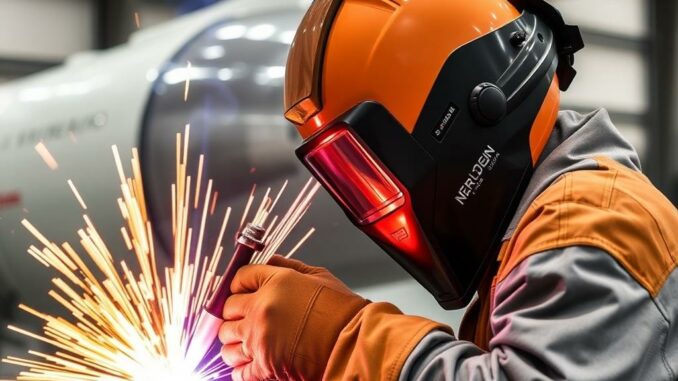
When we think about the incredible feats of human engineering that take place in aerospace, from commercial airliners to space shuttles, one element often goes unnoticed yet is absolutely critical: aerospace welding. This highly specialized field is the backbone of building safe, durable, and reliable aircraft and spacecraft. In this article, we’ll take a deep dive into what makes aerospace welding so unique. We’ll explore the techniques, materials, challenges, and why precision and skill in this area are so essential to aerospace safety and performance.
Understanding Aerospace Welding: What Sets It Apart?
Welding is a fabrication process that joins materials such as metal or thermoplastics by causing fusion. While welding is common across many industries, aerospace welding demands a level of precision and expertise beyond typical applications. The aerospace industry deals with extreme conditions—high pressure, high temperatures, constant vibrations, and safety-critical operations. Thus, even the smallest welding imperfection can lead to catastrophic failure.
What really sets aerospace welding apart is the combination of strict regulatory requirements and the advanced materials involved. Components must not only be strong and lightweight but also meet rigorous quality standards laid out by authorities such as the Federal Aviation Administration (FAA) and the European Aviation Safety Agency (EASA). From fighter jets to satellites, every weld needs perfect strength, corrosion resistance, and fatigue life.
Why Precision Matters in Aerospace Welding
Imagine a small crack or weak spot in the weld of a jet engine component—it’s not just a repair issue, it could mean the difference between a safe flight and disaster. Precision in aerospace welding means ensuring every microscopic detail is controlled, from heat input to weld bead size. This minimizes residual stress and microstructural defects that could propagate over time and lead to failure.
The aerospace welding process requires operators to meticulously follow welding procedures qualified by aerospace standards such as NADCAP (National Aerospace and Defense Contractors Accreditation Program). These procedures guarantee consistent quality and traceability. In addition, non-destructive testing (NDT) methods inspect welds to detect any internal defects without damaging the part.
Common Welding Techniques Used in Aerospace
Aerospace welding isn’t limited to one or two methods. Instead, several advanced techniques are mastered depending on the materials and the part being manufactured. Each technique offers specific advantages tailored to the precise requirements of aerospace components.
Tungsten Inert Gas (TIG) Welding
TIG welding, also known as Gas Tungsten Arc Welding (GTAW), is one of the most commonly used processes in aerospace. It uses a tungsten electrode to create the weld and an inert gas, such as argon, to protect the weld pool from contamination. This technique provides excellent control over heat input and produces high-quality, clean welds with minimal spatter.
TIG welding is particularly suitable for thin aerospace materials like aluminum alloys and titanium. These metals require precise heat control to prevent warping or weakening. The operator’s steady hand and experience are vital in creating flawless welds that meet aerospace standards.
Electron Beam Welding (EBW)
Electron Beam Welding is a high-energy, vacuum-based process that uses a focused beam of electrons to melt and join metals. The vacuum environment prevents oxidation and contamination, resulting in deep, narrow welds with minimal distortion.
This technique is ideal for welding exotic aerospace materials such as titanium or nickel-based superalloys, which are difficult to weld with conventional methods. One of the key benefits of EBW is the ability to weld in extremely precise locations, making it invaluable for critical aerospace components.
Friction Stir Welding (FSW)
Friction Stir Welding is a solid-state joining process where a rotating tool generates frictional heat, softening materials and stirring the edges together without melting. This process produces welds with excellent mechanical properties and low residual stresses.
FSW is increasingly popular in aerospace manufacturing, especially for joining aluminum alloys used in fuselage panels and wings. Since it doesn’t involve melting, the welded area maintains its original microstructure, resulting in stronger, fatigue-resistant joints.
Material Challenges in Aerospace Welding
Aerospace structures are commonly made from metals such as aluminum, titanium, nickel alloys, and stainless steel. These metals often present special challenges for welding due to their unique physical and chemical properties.
Aluminum Alloys: Lightweight but Tricky
Aluminum is prized in aerospace for its light weight combined with good strength. However, its high thermal conductivity means heat quickly dissipates during welding, requiring precise technique to achieve full penetration without excessive heat input. Additionally, aluminum forms an oxide layer that must be cleaned before welding to prevent porosity and weak welds.
Titanium: Strength at a Cost
Titanium’s exceptional strength-to-weight ratio and corrosion resistance make it a premium aerospace material. However, it is highly reactive at elevated temperatures and can easily absorb oxygen and nitrogen from the air, which degrades weld quality. This necessitates welding in controlled environments such as inert gas or vacuum conditions.
Nickel-Based Superalloys: Heat Champions
Nickel-based superalloys are used in jet engines because they withstand extreme heat and mechanical stress. Welding these superalloys is technically demanding because of their susceptibility to cracking and distortion. Specialized techniques such as EBW and laser welding are often employed to create robust joints.
Quality Control and Inspection: Critical Steps After Welding
In the aerospace industry, welding doesn’t end when the parts are joined. Post-weld inspection is a critical part of ensuring overall safety and reliability. Weld quality needs to be verified to detect any hidden flaws that could compromise integrity during service.
Nondestructive Testing Methods
Inspection methods include ultrasonic testing (UT), radiographic testing (RT), dye penetrant testing (DPT), and magnetic particle testing (MPT). These techniques allow inspectors to analyze welds for internal cracks, porosity, or other defects without damaging the component.
| Testing Method | Purpose | Advantages | Limitations |
|---|---|---|---|
| Ultrasonic Testing (UT) | Detect internal flaws using sound waves | Highly sensitive; non-destructive | Requires skilled operators; limited for complex geometries |
| Radiographic Testing (RT) | X-rays to reveal internal defects | Detailed images; detects small cracks | Safety concerns from radiation; expensive |
| Dye Penetrant Testing (DPT) | Surface crack detection | Simple and cost-effective | Only surface flaws; requires cleaning |
| Magnetic Particle Testing (MPT) | Detects surface and near-surface defects in ferromagnetic materials | Fast and easy to apply | Limited to magnetic materials |
Documentation and Traceability
Another essential element of aerospace welding is documentation. Every weld must have detailed records of the welding procedure, materials used, welder qualifications, and inspection results. This traceability ensures accountability and is often required for certification. Materials and components can be traced back through their entire manufacturing process, giving confidence in their suitability for flight.
The Role of Skilled Welders in Aerospace
While advanced equipment and processes are vital, the expertise of the welder remains at the heart of aerospace welding. Skilled welders must undergo rigorous training and certification to master the techniques and understand the nuances of different materials and welding environments.
The aerospace welder’s job is exacting, often requiring prolonged focus to ensure perfect welds. Many welds are performed under specialized conditions such as cleanrooms or vacuum chambers, adding to the technical challenge. The welder’s ability to interpret weld maps, maintain consistency, and troubleshoot defects is vital to the success of aerospace fabrication.
Training and Certification
Becoming an aerospace welder involves completing accredited training programs and passing certification tests aligned with industry standards such as ASME Section IX (boiler and pressure vessel codes) and AWS D17.1 (welding in aerospace). Continuous education is common as new technologies and materials evolve.
- Understanding complex welding procedures
- Mastering non-destructive testing basics
- Adhering to safety and quality standards
- Keeping up-to-date with regulations and new materials
Advances and Innovations in Aerospace Welding
As aerospace continues to push boundaries, so do welding technologies and methodologies. One exciting area of innovation is the use of automation and robotics. Automated welding systems deliver consistent quality and reduce human error in repetitive or difficult welds.
In addition, laser welding has gained popularity for its precision and speed. It uses focused laser beams to create very narrow welds with minimal thermal effects, making it ideal for micro-welding applications or thin aerospace materials.
Researchers are also exploring additive manufacturing (3D printing) combined with welding techniques to create complex aerospace parts that were previously impossible to fabricate using traditional methods.
Summary: The Stakes Are High in Aerospace Welding
Aerospace welding is one of the most challenging and vital fields in modern manufacturing. The men and women who specialize in this work combine deep technical knowledge, strict adherence to standards, and years of skill development to create welds that can withstand the rigorous demands of aviation and space travel.
From advanced welding techniques like TIG, EBW, and friction stir welding to careful selection of aerospace materials and meticulous inspection, every step in the welding process focuses on precision and quality. The remarkable safety records and achievements of the aerospace sector owe a great deal to the discipline and dedication of aerospace welders and engineers.
Whether building the wings of a commercial airliner or the engine components of a rocket, aerospace welding represents a perfect blend of craftsmanship and science — a high-stakes, precision work that makes flight possible.